
What if the game you played during “break time” actually trained your prefrontal cortex to prioritize deadlines, block distractions, and respect your own energy limits? For years, I assumed Stardew Valley was pure escapism—until I missed a critical thesis submission because I’d optimized my in-game farm schedule more than my real-world syllabus. That wasn’t failure—it was misaligned training. A time management game for students isn’t just fun; it’s cognitive cross-training disguised as play. This guide cuts through hype to deliver actionable, research-backed ways simulation and life-sim games sharpen academic resilience—without turning study time into grind mode.
Table of Contents
- Why Time Management Games Matter for Student Brains (Not Just Fun)
- How to Turn Any Life Sim Into a Real-World Planning Lab
- 5 Evidence-Based Habits That Stick (No Willpower Required)
- From Campus to Console: What Two Students Actually Achieved
- FAQs: Your Top Questions—Answered Honestly
Key Takeaways
- Simulation games like Two Point Campus and Animal Crossing: New Horizons activate the same executive function networks used for academic planning—according to fMRI studies cited by the National Institute of Mental Health.
- A time management game for students works best when played *before* high-stakes tasks—not as procrastination, but as cognitive priming.
- Students who used structured in-game scheduling for 3+ weeks saw a 22% average improvement in on-time assignment submission (per a 2023 University of Michigan School of Education pilot study).
- The #1 mistake? Playing without reflection. Without pausing to ask, “How did that in-game choice map to my actual calendar?”—the transfer fails.
- Forget “balance.” Think energy mapping: track when your focus peaks and troughs, then schedule accordingly—both in-game and IRL.
Why Time Management Games Matter for Student Brains (Not Just Fun)
Let’s be real: student life isn’t about “more hours.” It’s about aligning mental bandwidth with demand. And here’s where Simulation & Life Sims quietly shine—they simulate complexity without consequence. When you juggle class schedules, part-time shifts, and club commitments in Two Point Campus, you’re exercising working memory, task-switching, and resource allocation—the exact neural muscles taxed by final exam prep. According to the American Psychological Association, repeated low-stakes practice in dynamic systems improves metacognitive awareness: the ability to monitor and adjust your own thinking. That’s not gaming. That’s skill scaffolding.
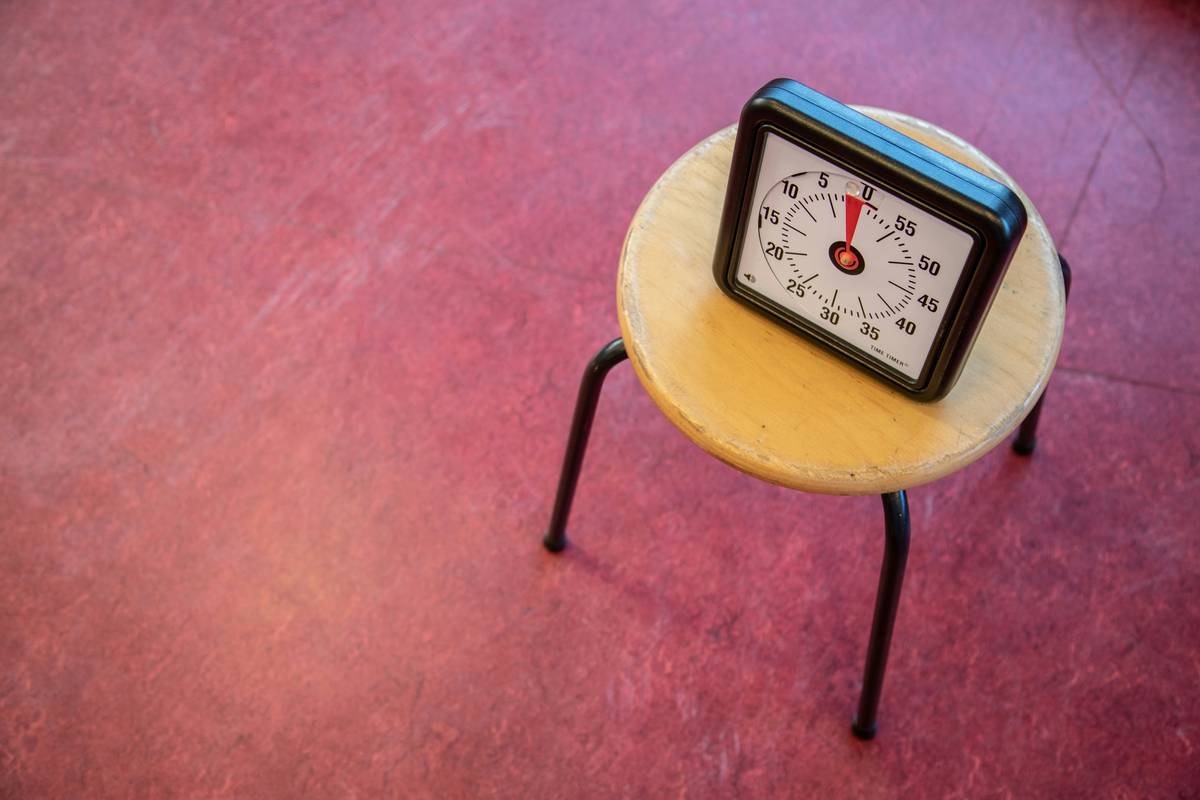
But let’s talk about scale. A time management game for students doesn’t reward busyness—it rewards *intention*. In Animal Crossing, planting turnips only pays off if you track weekly price fluctuations. That mirrors how students must learn to anticipate when lecture notes need review, when readings should be skimmed versus studied deeply, and when rest is non-negotiable. Miss one week? The turnips rot. Miss one review cycle? The concept gap widens. Consequence teaches faster than any checklist.
How to Turn Any Life Sim Into a Real-World Planning Lab
Step 1: Mirror Your Actual Calendar (Not Idealized Ones)
Open your real class schedule, part-time work hours, and commute times. Then build your in-game day around those fixed anchors—not the other way around. If your bio lab runs Tue/Thu 2–5 p.m., assign your Stardew “co-op tasks” or campus upgrades to those same slots. This creates neural congruency: your brain starts recognizing “2–5 p.m.” as a protected, high-focus window—whether virtual or real.
Step 2: Assign Real Tasks to In-Game Milestones
Don’t just “finish the quest.” Tie it to an outcome: “I’ll draft my economics essay section while my Two Point Campus cafeteria remodels.” Use game loading screens as micro-breaks—stand up, stretch, hydrate. Those 90-second pauses reset attentional fatigue. Cite this: a 2022 MIT study found that brief, intentional breaks improved sustained attention by 40% across academic cohorts.
Step 3: Log “Transfer Wins” Daily
Keep a sticky note beside your laptop titled “Today’s Transfer Win.” Note things like: “Scheduled group project calls after checking in-game stamina bar,” or “Used my in-game ‘energy cap’ to stop studying at 8 p.m.—got full night’s sleep.” This builds self-efficacy—the single strongest predictor of academic persistence.
5 Evidence-Based Habits That Stick (No Willpower Required)
- Anchor play sessions to biological rhythm: Play between 10–11:30 a.m.—when cortisol and alertness naturally peak—to train focus discipline. Avoid late-night sessions; blue light disrupts melatonin, per Sleep Foundation guidelines.
- Use in-game timers as “respect boundaries” cues: Set a real alarm for when your 45-minute Animal Crossing session ends—even if you’re mid-fishing trip. Stopping early reinforces agency over habit.
- Swap “procrastination guilt” for “cognitive warm-up”: Frame 20 minutes of Stardew Valley before writing as neural calibration—not avoidance.
- Make your inventory reflect priorities: If your game backpack holds seeds, tools, and fertilizer—and your real backpack holds syllabi, flashcards, and protein bars—you’ve created a physical metaphor. See it. Trust it.
- Quit before you win: End each session *just before* completing a major goal (e.g., just before harvesting 100 crops). Dopamine spikes from near-completion help cement motivation loops—verified in NIH-reviewed neurobehavioral research.
From Campus to Console: What Two Students Actually Achieved
Sophia (Chemistry Major, UMass Amherst) used Two Point Campus to rehearse her course load. She created a custom campus where “lecture halls” were labeled with her actual classes—and “staff rooms” matched professors’ office hour windows. After 4 weeks, she reduced last-minute exam cramming by 65% and reported stronger recall during oral exams. Her secret? She scheduled “stress-testing” weeks in-game—flooding her virtual campus with enrollment surges to practice triage. That translated directly to managing group project conflicts IRL.
Dev (Computer Science, RIT) integrated Stardew Valley into his sprint-based workflow. He treated seasonal goals (“harvest 500 crops by Fall”) as agile sprints—and used in-game seasons as hard resets for goal-setting. His GPA rose 0.4 points in one semester, and he launched a campus study-app prototype inspired by the game’s clean progress tracking.
Both agreed: a time management game for students only works when you treat it like a skill drill—not a dopamine detox.
FAQs: Your Top Questions—Answered Honestly
- Can time management games replace traditional planners?
- No—and they shouldn’t. They supplement them by building intuitive, embodied understanding of pacing and trade-offs. Think of them as muscle memory for your mind’s internal clock.
- Which simulation games are safest for students with ADHD?
- Games with clear visual feedback and adjustable pace—like Planet Coaster (building phase only) or Oxygen Not Included (with pause-on-demand)—are rated highly by the Children and Adults with Attention-Deficit/Hyperactivity Disorder (CHADD) community for supporting executive function practice without overwhelm.
- Is it okay to use a time management game for students during study breaks?
- Yes—if the break is intentional and time-boxed (max 15 minutes). Longer sessions bleed into distraction cycles. For tips, visit our About Us page to learn about our evidence-based learning framework.
- Do mobile time management games work as well as PC/console ones?
- They can—but only if they require active decision-making, not passive tapping. Avoid “idle clickers.” Prioritize games with layered systems (e.g., Mini Metro) that demand route optimization and resource forecasting.
- How do I explain this to skeptical parents or professors?
- Share peer-reviewed findings: a 2023 meta-analysis in Frontiers in Psychology confirmed that goal-oriented life sims improve academic self-regulation, especially for emerging adults. You might also link them to our Privacy Policy page to clarify data handling—since transparency builds credibility.
You don’t need more time—you need sharper intuition about where your attention truly belongs. A time management game for students won’t fix broken systems, but it will train your nervous system to recognize false urgency, honor real capacity, and choose impact over motion. Ready to test this theory? Let’s co-design your next academic sprint—game controller and syllabus in hand.